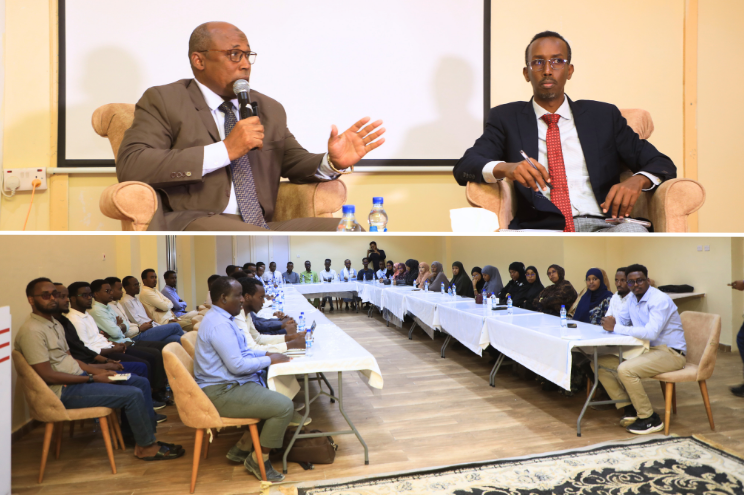

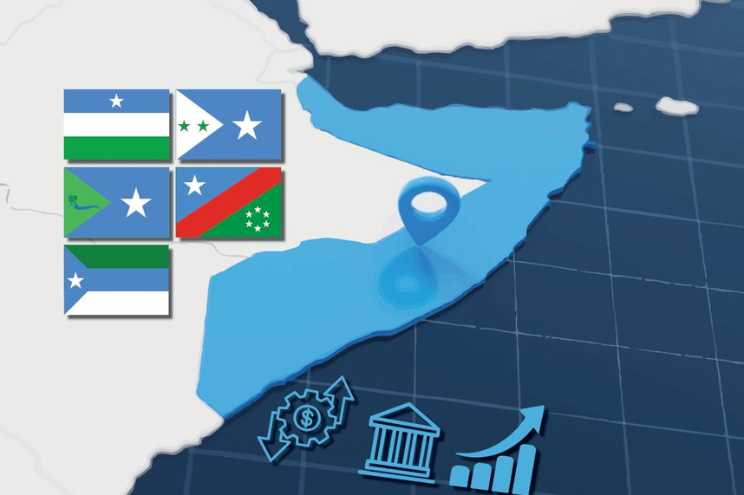
Somalia’s public financial management (PFM) systems have evolved in the shadow of decades of institutional collapse, fiscal disorder, and fragile political settlements. Since the re-establishment of the first non-transitional Federal Government of Somalia (FGS) in 2012, successive administrations, often under the guidance of the International Monetary Fund (IMF) and World Bank, have pursued reforms aimed at rebuilding fiscal credibility, restoring donor confidence, and preparing the country for debt relief under the Heavily Indebted Poor Countries (HIPC) Initiative. These reforms, however, have unfolded in a deeply contested federal landscape, where questions of fiscal authority, revenue sharing, and financial accountability remain unresolved between the federal government and Federal Member States (FMS). This study examines how Somalia’s Public Finance Management (PFM) systems have improved since 2012, with particular attention to their role in fiscal performance, revenue mobilization, expenditure management, fiscal transparency, and intergovernmental financial relations. The research draws on an extensive desk review complemented by semi-structured interviews conducted both in Mogadishu and remotely with officials from the Federal Government, Federal Member States, and fiscal experts. This mixed approach ensured inclusion of perspectives from across Somalia and generated grounded insights into the technical and political dimensions of fiscal reform.
The findings highlight that while Somalia has made important strides particularly in meeting externally driven benchmarks, its fiscal architecture remains fragile. Moreover, the study also reveals that Somalia’s fiscal progress has been heavily dependent on external pressure and donor support. Domestic revenue remains weak, concentrated mainly in Mogadishu and trade hubs, although inland tax bases are quietly developing. Most FMS governments lack strong revenue streams, with Southwest, Galmudug, and Hirshabelle heavily reliant on transfers from the FGS and donor aid. This imbalance is compounded by the lack of a coherent revenue-sharing framework, leaving fiscal federalism unsettled and prone to disputes.
Examining the Role of Public Finance Management (PFM) Systems in Improving Fiscal Performance in the Federal Government of Somalia (FGS) and Federal Member States (FMS)
SPA_Research_Report_No_19

Research Consultant
Share This:


Stay updated on governance and public services in Somalia!
Somali Public Agenda (SPA) is a non-profit, non-partisan, and independent public policy and administration research and action organization based in Mogadishu. It aims to advance understanding and improvement of public policy and services in Somalia through evidence-based research and analysis, dialogue, policy and service design, and training.
Stay updated on governance and public services in Somalia!