

This study has explored the evolution, operational dynamics, and systemic constraints of federal accountability institutions in Somalia. The findings indicate that the primary challenge facing Somalia’s oversight framework is no longer the complete absence of formal laws or structural architecture. Rather, the central obstacle lies in the significant gap between formal institutional mandates and their practical and impartial enforcement.
Over the past decade, Somalia has made progress in establishing a legislative framework for a modern public financial management system. However, these gains remain fragile and are consistently challenged by systemic vulnerabilities. Accountability institutions continue to struggle with low technical capacity, severe resource constraints, and a highly politicized administrative environment where patronage networks and the 4.5 power-sharing system often take precedence over merit-based recruitment. Furthermore, the lack of formalized, mandatory channels of collaboration among key oversight actors has resulted in a fragmented system in which critical audit findings rarely transition into timely corrective or legal actions.
Crucially, the study highlights a profound paradox: as the technical capacity of oversight bodies gradually improves, the selective application of accountability mechanisms, often perceived as politically motivated, threatens to erode public and institutional trust in the fairness of the state’s actions. For accountability to serve as a meaningful tool for state-building and to foster public confidence, the federal government must look beyond merely passing new legislation. Without bridging this implementation gap, Somalia risks failing to build the domestic legitimacy required to secure long-term partner trust in country systems and attract sustainable foreign investment. True governance reform requires moving beyond symbolic compliance to ensure that institutional mandates are backed by genuine enforcement, transparency, and impartiality. Future reform efforts must focus on insulating existing institutions from political interference, securing their financial autonomy, upgrading outdated judicial frameworks, and building sustainable and localized human capital. Without these deliberate steps, formal accountability structures will continue to struggle to move beyond symbolic compliance and achieve the practical enforcement necessary to safeguard Somalia’s public resources.
Beyond Formal Institutions: Strengthening Accountability and Oversight in Somalia’s Federal Government
SPA_Research_Report_No_25_ENGLISH
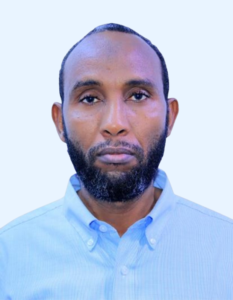
Research Consultant
Share This:


Stay updated on governance and public services in Somalia!
Somali Public Agenda (SPA) is a non-profit, non-partisan, and independent public policy and administration research and action organization based in Mogadishu. It aims to advance understanding and improvement of public policy and services in Somalia through evidence-based research and analysis, dialogue, policy and service design, and training.
Stay updated on governance and public services in Somalia!